How to Choose Butt Weld Pipe Fittings for High-Pressure Systems
Why Connection Method Matters in Industrial Piping
Anyone who has worked with high-pressure pipelines knows that the weakest point in a system is almost always the joint. A pipe itself can handle enormous stress, but a poorly made connection becomes a failure waiting to happen. That is why engineers and fabricators spend so much time selecting the right fitting and the right joining method. Among the options available, butt weld pipe fittings have earned a strong reputation for reliability in demanding environments. They are not the only choice, but for certain applications they are the best choice.
The basic idea is simple: instead of threading or socketing, you align two pipe ends and weld them together around a fitting. The result is a continuous metal joint with no gaps, no threads, and no potential leak paths. That matters when you are dealing with steam, chemicals, or high-pressure gas. It also matters when the piping must meet strict code requirements from organizations like ASME, ANSI, or ASTM. These standards exist for a reason, and welded joints are often the easiest way to comply with them.
What Are Butt Weld Pipe Fittings
Butt weld pipe fittings are components designed to be welded directly onto the end of a pipe. Unlike threaded fittings, which rely on mechanical interlocking, or socket-weld fittings, which use a recess, butt weld fittings are butted flush against the pipe and fused with a weld. This creates a smooth interior surface with no crevices where debris or corrosion could start. That characteristic makes them especially valuable in sanitary fittings used in food processing, pharmaceuticals, and other industries where cleanliness is critical.
The term "butt weld" itself refers to the joint geometry. The pipe end and the fitting end are both prepared with a bevel or a square cut, then aligned and welded together. Common weld processes include TIG welding and orbital welding, both of which produce strong, consistent joints when done correctly. The choice of process often depends on the material and the thickness of the pipe wall.
Materials and Their Trade-Offs
Not all butt weld pipe fittings are made from the same material. The three most common are stainless steel, carbon steel, and copper nickel alloys. Each has strengths and weaknesses that matter in real installations.
Stainless steel is the go-to for corrosion resistance and cleanability. It stands up well to aggressive fluids and high temperatures, which is why you see it in chemical plants and pharmaceutical lines. However, stainless steel requires careful welding technique to avoid carbide precipitation and loss of corrosion resistance. If the weld cools too slowly or the heat input is too high, the joint can become vulnerable.
Carbon steel is less expensive and easier to weld, but it rusts. For many industrial applications, that is acceptable if the system is painted or otherwise protected. Carbon steel fittings are common in pneumatic systems and hydraulic systems where the internal environment is controlled. They are also widely used in the oil and gas industry for pipelines that carry crude oil or natural gas, where the fluid itself provides some protection against corrosion.
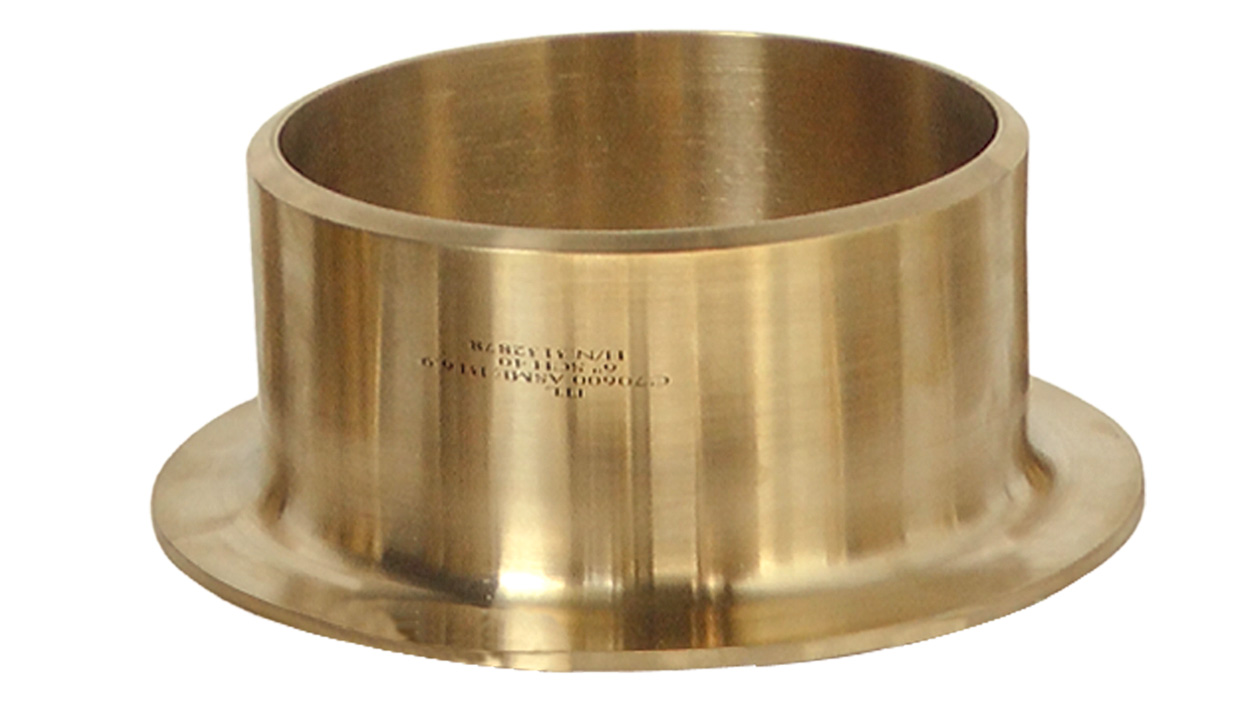
Copper nickel fittings occupy a smaller but important niche. They combine good corrosion resistance with excellent biofouling resistance, which makes them popular in marine and offshore applications. A Singapore-based supplier of high-quality copper nickel fittings and butt weld pipe fittings for industrial applications would typically serve customers in shipbuilding, desalination, and seawater cooling systems. Copper nickel also welds well with TIG welding, though the operator must account for the alloy's higher thermal conductivity.
Where Butt Weld Fittings Shine
Butt weld pipe fittings are especially well suited to high-pressure pipelines. When a system operates at pressures above, say, 300 psi, threaded joints can become a concern. Threads create stress risers and potential leak paths. A welded joint, by contrast, distributes stress evenly around the circumference of the pipe. That is why many high-pressure steam and hydraulic systems specify butt weld fittings exclusively.
Another area where they excel is in systems that require frequent cleaning or sterilization. Because the interior of a butt weld joint is smooth and continuous, there are no crevices for bacteria or sediment to hide. This makes them a natural fit for sanitary fittings in dairy, beverage, and biotechnology plants. The same smooth bore also reduces pressure drop, which can improve system efficiency.
Pneumatic systems also benefit from butt weld joints. Compressed air systems often experience condensation, and threaded joints can trap moisture and lead to corrosion. A welded joint eliminates that problem. The same reasoning applies to hydraulic systems where fluid cleanliness is critical. A single piece of debris from a threaded connection can damage a valve or actuator.
Installation Considerations
Getting a butt weld joint right takes skill. The fitter must prepare the pipe end and the fitting end so they mate squarely. Any gap or misalignment can lead to a weak weld. The bevel angle matters too. Too steep a bevel and the weld pool may not penetrate fully. Too shallow and the joint may lack strength.

Welding parameters - amperage, travel speed, filler metal choice - all affect the final joint. For stainless steel, a backing gas like argon is often used to prevent oxidation on the inside of the weld. For carbon steel, preheat may be necessary to avoid cracking in thick sections. Copper nickel requires a clean surface and careful heat control to avoid overheating the alloy.
Inspection is another step that should not be skipped. Many codes require radiographic or ultrasonic testing of butt weld joints in critical systems. Visual inspection alone is not enough. A good weld looks smooth on the outside, but the real test is whether the fusion is complete and free of porosity on the inside.
Standards and Compliance
Most industrial piping systems must meet requirements set by organizations like ASME, ANSI, and ASTM. These standards cover everything from material chemistry to weld procedure to testing. For example, ASME B31.1 covers power piping, while ASME B31.3 covers process piping. Each has specific rules for butt weld joint design and inspection. ANSI and ASTM standards define the dimensional tolerances for butt weld pipe fittings, ensuring that a fitting from one manufacturer fits a pipe from another.
When selecting fittings, it pays to check that they are marked with the applicable standard. A fitting stamped with ASTM A312 or ASTM A403, for instance, indicates it meets the specification for stainless steel pipe fittings. For copper nickel, ASTM B466 or equivalent is common. Knowing these markings can save a lot of trouble during a code inspection.
Butt Weld vs. Other Methods
No single joining method is perfect for everything. Threaded fittings are easy to install and allow for disassembly, but they are not as strong as welded joints and they create leak paths. Socket-weld fittings are common in smaller sizes, but they leave a small internal gap that can trap fluid. Flanged joints are strong and serviceable, but they are bulky and expensive.
Butt weld pipe fittings offer the best combination of strength, cleanliness, and reliability for many industrial applications. The trade-off is that they require skilled labor and proper equipment. If a system will never need to be disassembled, and if the operating conditions are demanding, butt weld is often the right call.
That said, there are cases where another method makes more sense. For example, in a temporary installation or a system that requires frequent modification, threaded or flanged joints are more practical. The decision always comes down to the specific requirements of the job.
Practical Tips for Selection
Here are a few things to keep in mind when choosing butt weld pipe fittings:
- Match the fitting material to the pipe material exactly. Mixing alloys can cause galvanic corrosion or welding difficulties.
- Check the wall thickness schedule. A schedule 80 fitting is heavier than schedule 40 and requires different welding parameters.
- Consider the end use. Sanitary fittings need a smooth internal finish; high-pressure fittings need full penetration welds.
- Verify that the fitting is marked with the relevant ASME, ANSI, or ASTM standard for your jurisdiction.
- If you are sourcing from a supplier in Singapore, confirm that the fittings meet the same standards you follow locally.
The Bottom Line
Butt weld pipe fittings are a proven solution for demanding piping systems. They deliver strong, leak-free joints that stand up to high pressure, high temperature, and aggressive environments. Whether you are working with stainless steel, carbon steel, or copper nickel, the principles are the same: prepare the joint carefully, weld with control, and inspect the result. For engineers and fabricators who take that process seriously, butt weld fittings offer a level of reliability that is hard to beat.